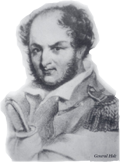

General Joseph Holt
1798

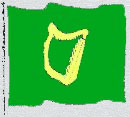
Holt Family Fellowship Flag
General Holt's
Battle Flag
1798

THE HOLT FAMILY FELLOWSHIP

Est.11th January 2000

"Who wishes to serve his fellow creature will meet with the merit of his own action in time to come."
Joseph Holt 1756 - 1826, A Rum Story, Peter O'Shaughnessy editor, 1988, p.53.

Ascendancy and Yeoman Researchers' Chat


The following instructions have been written to help those chatters unfamiliar with the process.

*** New User: Please Register to Chat

Registered User Log in:
Enter your email address:

Most recent messages:

DateTimeNameMessage
17th Jan 12 06:53:48 Lionel Fowler Thanks Rob Brian. As editor of The Holt Family Fellowship's webpage, I was happy to draw Matthew's attention to your chat room entry last year. i congratulate you on the success of your unusual but effective way of providing him with information regarding his birth mother and her Nursing Home. It seems that they are now allowing her to use Skype for him to make contact from Bali.
23rd Oct 11 17:39:37 Rob Brian I would like Matthew Robert Fowler to contact me. I have a message from his mother, now known as Dorothy Ann Jobson, who resides in Vaucluse Nursing Home, Young Street, Vaucluse, NSW, 2030, Australia. Thank you,
Rob Brian
10th Feb 11 12:50:26 Matthew Fowler I find it fascinating to read so much about my maternal Ascendency Apical Ancestors & Judkin-FitzGerald family also how Henry Charles Sirr (1764 - 1841) is my 4th great grand uncle through our ancestor
Joseph Sirr
Father of Henry Charles
Frances Catherine Sirr (1759 - 1810)
Daughter of Joseph
Louisa Arabella Minchin (1794 - 1882)
Daughter of Frances Catherine
Walter Bourne (1828 - 1897)
Son of Louisa Arabella
Arthur Uniacke Bourne (1875 - )
Son of Walter
Robert Fitzgerald Bourne (1905 - 1946)
Son of Arthur Uniacke
Dorothy Ann Fitzgerald Bourne (1940 - )
Daughter of Robert Fitzgerald Bourne
Matthew Robert Fowler (b. Muswell Hill, London, N.10 - . 12.7.64.)
Thus, I am the son of Dorothy Ann Fitzgerald Fowler nee Bourne:
(Editor's note: As are Matthew's brothers - John Shorten Fowler, b. Paddington General Hospital, London, W.9 - 19.1.63 and Thomas Andrew Fowler, b. The Royal for Women's Hospital, Paddington, Sydney, 2000 - 01.01.66).

http://www.chaptersofdublin.com/books/shamsquire/stepladder.htm
29. To describe the exploits of the members of that body, styled by General Cockburn, "R----n Magistrates," would be to write the history of the whole, and we are spared the painful necessity of detailing, ad nauseam, scenes of revolting barbarity. As a specimen of his magisterial colleagues and contemporaries, take Mr Thomas Judkin Fitzgerald, high sheriff for the county of Tipperary. From the trial of Doyle v. Fitzgerald, we learn that the defendant, in the street, and for the purpose of flagellation, seized Doyle, who was a respectable tradesman in Carrick. In vain he declared his innocence; and some of the most respectable inhabitants tendered evidence in support of that declaration. Doyle was a yeoman, and he begged that Captain Jephson, his commanding officer, might be sent for; the request was refused. He offered to go to instant execution if, on inquiry, the shadow of sedition could be advanced against him; but inquiry was declined. Bail was then offered to any amount for his appearance, but Mr Fitzgerald would not be balked in the sport of which he had a foretaste, and declaring that he knew Doyle by his face to be a "Carmelite traitor," tied him to the whipping-post, where he received 100 lashes until his ribs appeared; his knee-breeches were then removed, and 50 more lashes administered. Doyle's entire innocence was afterwards proved. He appealed at the Clonmel assizes for redress; the facts appeared to demonstration; but an Orange jury, packed by the sub-sheriff, acquitted the high sheriff, Mr Judkin Fitzgerald.

Mr Wright, a teacher of the French language, employed both by public schools and private families, having called on Mr Fitzgerald, the latter drew his sword, exclaiming, "Down on your knees, rebellious scoundrel, and receive your sentence" - which was to be flogged first and shot finally. Wright surrendered his keys, and expressed himself willing to suffer any punishment if his papers or conduct revealed proof of guilt. "What! you Carmelite rascal," exclaimed the high sheriff, "do you dare to speak after sentence?" He then struck him and ordered him to prison. The next day, when brought forth to undergo his sentence, Wright knelt down in prayer, with his hat before his face. Mr Fitzgerald snatched the hat from him and trampled on it, seized Wright by the hair, dragged him to the earth, kicked him and cut him across the forehead with his sword, then had him stripped naked, tied up to the ladder, and ordered him 50 lashes. Major Rial came up as the 50 lashes were completed, and asked the cause. Mr Fitzgerald handed him a note written in French, saying, he did not himself understand French, though he understood Irish, but Major Rial would find in that letter what would justify him in flogging the scoundrel to death. Major Rial read the letter. He found it to be a note for the victim, which he thus translated

"I am extremely sorry I cannot wait on you at the hour appointed, being unavoidably obliged to attend Sir Laurence Parsons. -Yours, Baron De Clues."

Notwithstanding this translation," observes Mr Plowden, "Mr Fitzgerald ordered Wright 50 more lashes, which were inflicted with such peculiar severity, that the bowels of the bleeding victim could be perceived to be convulsed and working through his wounds! Mr Fitzgerald, finding he could not continue the application of his cat-o'nine-tails on that part without cutting his way into his body, ordered the waistband of his breeches to be cut open, and 50 more lashes to be inflicted. He then left the unfortunate man bleeding and suspended, while he went to the barrack to demand a file of men to come and shoot him; but being refused by the commanding officer, he came back and sought for a rope to hang him, but could get none. He then ordered him to be cut down and sent back to prison, where he was confined in a dark small room, with no other furniture than a wretched pallet of straw, without covering, and there he remained seven days without medical aid!" [Trial of Wright r. Fitzgerald, Plowden's History of Ireland, vol. ii., p.546, &c.]

Wright brought an action and - mirabile dictu- obtained a verdict; but the effect of it was neutralised by the open indemnification of Mr Fitzgerald for certain acts done by him not justifiable in common law. [Barrington's Personal Sketches, vol. iii., p. 267] He received from the crown a considerable pension for his ultra-loyal services in 1798, and on August 5, 1801, was created a baronet. [Burke's Peerage and Baronetage, p.399]

Tipperary is full of traditions of his excessive political zeal. One represents him equipped in cocked hat and sword, mounting the altar steps of old Latin chapel during the most solemn part of the mass, and endeavouring to recognise among the congregation some unfortunate man whom he desired to scourge. [Letter of Rev. Dr Fitzgerald, P. P., Ballinagarry, County Tipperary, July 10, 1865.] On another occasion he ascended the altar in Tipperary chapel during the delivery of an exhortation by the parish priest. Mr Fitzgerald for convenience placed his three-cocked hat on the same bench which bore the Blessed Sacrament, and it was thought, at the time, an act of most singular daring on the part of the priest to remove the terrorist's hat and hand it to an acolyte. [Statement of Rev. W. Wall, P.P., Clonoulty, Cashel, September 1865.] It was said that Mr Fitzgerald used to steep his cat-o'-nine-tails in brine before operating. "I have preserved the country," he boasted. "Rather say that you have pickled it," replied Jerry Keller.

Cox, in his Magazine, furnishes a criminatory obituary of Sir Thomas Judkin Fitzgerald, who, execrated by the people, whom he had stung to fury and madness, sank into his grave September 24, 1810. "The history of his life and loyalty;" observes Cox, "is written in legible characters on the backs of his countrymen." [Irish Magazine, October 1810, p.482.] The painful mariner in which the lives of the late baronets of this family terminated, presents some remarkable coincidences. Sir John Judkin Fitzgerald, son of the terrorist, was drowned in the Nimrod in its passage from Bristol to Cork. His son, Sir Thomas Judkin Fitzgerald - reduced to pecuniary straits - opened a blacking manufactory, and committed suicide in the year 1864; and again, his son, a flue boy, hanged himself accidentally while playing with "a swing" in the garden at Golden Hills. [Letter from W. L. Hackett, Esq., M.A. Ex-Mayor, dated "Clonmel, April 163 1805."]

30. Major Sirr, who, acting upon the information supplied by Francis Higgins, shot at and captured Lord Edward Fitzgerald, is no stranger to the reader of these pages. For a pithy resume of his life he would do well to consult Curran's speech in the case of Hevey versus Sirr.

"For the purpose of this trial," said he, "I must carry back your attention to the melancholy period of 1798. It was at that sad crisis that the defendant from an obscure individual started into notice and consequence. It is in the hotbed of public calamity that such portentous and inauspicious products are accelerated without being matured. From being a town-major, a name scarcely legible in the list of public incumbrances, he became at once invested with all the powers of absolute authority. The life and the liberty of every man seemed to have been surrendered to his disposal. With this gentleman's extraordinary elevation begins the story of the sufferings and ruin of the plaintiff."

The cessation of the rebellion, and the introduction of a milder system of government, found Henry Charles Sirr's occupation hone. He became a "picture fancier," cultivated the fine arts, frequented auctions, accumulated fossils and minerals, sonorously sung psalms, and exhibited the whites of his eyes rather than the blackness of his heart. Fifty years ago he was appointed police magistrate of Dublin, and continued to discharge its duties until his death hi 1841, when "the remains of the assassin of Lord Edward," [This phrase is not, perhaps, strictly accurate. Mr Robert Travers, A.M., MB., the present professor of medical jurisprudence in the ~niversity of Dublin, addressing the writer of these pages,- "An inquest was held in Newgate on the body of Lord E. Fitzgerald, and on the evidence of Surgeon Leake, a verdict returned of death from water in the chest. This fact is not known to many. I have sometimes mentioned it to my class when lecturing on forensic medicine."] writes Mr Gilbert, "were deposited in Werburgh's churchyard," the same mortuary which contains Lord Edward's bones. "The stone, shaded by a melancholy tree," he adds, "does not explicitly state that the town-major of '98 was buried under it, and appears to have been originally placed over the corpse of his father, who preceded him in that office, and was also distinguished by his bad character, a fact unknown to the biographers of Lord Edward Fitzgerald. A more infamous tool than Henry Charles Sirr was probably never employed; the bare relation of his atrocities would far exceed the wildest fiction which ever emanated from the brain of the most morbid romancist."

31. Identified with Major Sirr in most of his plans, perfidies, and perils, all that has been said of Sirr is applicable to Swan, with this exception, that Sirr professed to be a saint, while his deputy Swan, frank, jolly, and outspoken, claimed to be no better than an "honest sinner." Of Swan's efficiency as a rebel-hunter, the Sham Squire was a constant eulogist; and in one of his laudations, it is stated that the Government proved their appreciation of "Major Swan's" services by awarding him the commission of the peace for every county in Ireland.
9th Feb 11 17:27:19 Matthew Fowler I find it fascinating to read so much about my maternal Ascendency Apical Ancestors & Judkin-FitzGerald family also how Henry Charles Sirr (1764 - 1841) is my 4th great grand uncle through our ancestor
Joseph Sirr
Father of Henry Charles
Frances Catherine Sirr (1759 - 1810)
Daughter of Joseph
Louisa Arabella Minchin (1794 - 1882)
Daughter of Frances Catherine
Walter Bourne (1828 - 1897)
Son of Louisa Arabella
Arthur Uniacke Bourne (1875 - )
Son of Walter
Robert Fitzgerald Bourne (1905 - 1946)
Son of Arthur Uniacke
Dorothy Ann Fitzgerald Bourne (1940 - )
Daughter of Robert Fitzgerald
Matthew Robert Fowler
Thus I am the son of Dorothy Ann Fitzgerald:

http://www.chaptersofdublin.com/books/shamsquire/stepladder.htm
29. To describe the exploits of the members of that body, styled by General Cockburn, "R----n Magistrates," would be to write the history of the whole, and we are spared the painful necessity of detailing, ad nauseam, scenes of revolting barbarity. As a specimen of his magisterial colleagues and contemporaries, take Mr Thomas Judkin Fitzgerald, high sheriff for the county of Tipperary. From the trial of Doyle v. Fitzgerald, we learn that the defendant, in the street, and for the purpose of flagellation, seized Doyle, who was a respectable tradesman in Carrick. In vain he declared his innocence; and some of the most respectable inhabitants tendered evidence in support of that declaration. Doyle was a yeoman, and he begged that Captain Jephson, his commanding officer, might be sent for; the request was refused. He offered to go to instant execution if, on inquiry, the shadow of sedition could be advanced against him; but inquiry was declined. Bail was then offered to any amount for his appearance, but Mr Fitzgerald would not be balked in the sport of which he had a foretaste, and declaring that he knew Doyle by his face to be a "Carmelite traitor," tied him to the whipping-post, where he received 100 lashes until his ribs appeared; his knee-breeches were then removed, and 50 more lashes administered. Doyle's entire innocence was afterwards proved. He appealed at the Clonmel assizes for redress; the facts appeared to demonstration; but an Orange jury, packed by the sub-sheriff, acquitted the high sheriff, Mr Judkin Fitzgerald.

Mr Wright, a teacher of the French language, employed both by public schools and private families, having called on Mr Fitzgerald, the latter drew his sword, exclaiming, "Down on your knees, rebellious scoundrel, and receive your sentence" - which was to be flogged first and shot finally. Wright surrendered his keys, and expressed himself willing to suffer any punishment if his papers or conduct revealed proof of guilt. "What! you Carmelite rascal," exclaimed the high sheriff, "do you dare to speak after sentence?" He then struck him and ordered him to prison. The next day, when brought forth to undergo his sentence, Wright knelt down in prayer, with his hat before his face. Mr Fitzgerald snatched the hat from him and trampled on it, seized Wright by the hair, dragged him to the earth, kicked him and cut him across the forehead with his sword, then had him stripped naked, tied up to the ladder, and ordered him 50 lashes. Major Rial came up as the 50 lashes were completed, and asked the cause. Mr Fitzgerald handed him a note written in French, saying, he did not himself understand French, though he understood Irish, but Major Rial would find in that letter what would justify him in flogging the scoundrel to death. Major Rial read the letter. He found it to be a note for the victim, which he thus translated

"I am extremely sorry I cannot wait on you at the hour appointed, being unavoidably obliged to attend Sir Laurence Parsons. -Yours, Baron De Clues."

Notwithstanding this translation," observes Mr Plowden, "Mr Fitzgerald ordered Wright 50 more lashes, which were inflicted with such peculiar severity, that the bowels of the bleeding victim could be perceived to be convulsed and working through his wounds! Mr Fitzgerald, finding he could not continue the application of his cat-o'nine-tails on that part without cutting his way into his body, ordered the waistband of his breeches to be cut open, and 50 more lashes to be inflicted. He then left the unfortunate man bleeding and suspended, while he went to the barrack to demand a file of men to come and shoot him; but being refused by the commanding officer, he came back and sought for a rope to hang him, but could get none. He then ordered him to be cut down and sent back to prison, where he was confined in a dark small room, with no other furniture than a wretched pallet of straw, without covering, and there he remained seven days without medical aid!" [Trial of Wright r. Fitzgerald, Plowden's History of Ireland, vol. ii., p.546, &c.]

Wright brought an action and - mirabile dictu- obtained a verdict; but the effect of it was neutralised by the open indemnification of Mr Fitzgerald for certain acts done by him not justifiable in common law. [Barrington's Personal Sketches, vol. iii., p. 267] He received from the crown a considerable pension for his ultra-loyal services in 1798, and on August 5, 1801, was created a baronet. [Burke's Peerage and Baronetage, p.399]

Tipperary is full of traditions of his excessive political zeal. One represents him equipped in cocked hat and sword, mounting the altar steps of old Latin chapel during the most solemn part of the mass, and endeavouring to recognise among the congregation some unfortunate man whom he desired to scourge. [Letter of Rev. Dr Fitzgerald, P. P., Ballinagarry, County Tipperary, July 10, 1865.] On another occasion he ascended the altar in Tipperary chapel during the delivery of an exhortation by the parish priest. Mr Fitzgerald for convenience placed his three-cocked hat on the same bench which bore the Blessed Sacrament, and it was thought, at the time, an act of most singular daring on the part of the priest to remove the terrorist's hat and hand it to an acolyte. [Statement of Rev. W. Wall, P.P., Clonoulty, Cashel, September 1865.] It was said that Mr Fitzgerald used to steep his cat-o'-nine-tails in brine before operating. "I have preserved the country," he boasted. "Rather say that you have pickled it," replied Jerry Keller.

Cox, in his Magazine, furnishes a criminatory obituary of Sir Thomas Judkin Fitzgerald, who, execrated by the people, whom he had stung to fury and madness, sank into his grave September 24, 1810. "The history of his life and loyalty;" observes Cox, "is written in legible characters on the backs of his countrymen." [Irish Magazine, October 1810, p.482.] The painful mariner in which the lives of the late baronets of this family terminated, presents some remarkable coincidences. Sir John Judkin Fitzgerald, son of the terrorist, was drowned in the Nimrod in its passage from Bristol to Cork. His son, Sir Thomas Judkin Fitzgerald - reduced to pecuniary straits - opened a blacking manufactory, and committed suicide in the year 1864; and again, his son, a flue boy, hanged himself accidentally while playing with "a swing" in the garden at Golden Hills. [Letter from W. L. Hackett, Esq., M.A. Ex-Mayor, dated "Clonmel, April 163 1805."]

30. Major Sirr, who, acting upon the information supplied by Francis Higgins, shot at and captured Lord Edward Fitzgerald, is no stranger to the reader of these pages. For a pithy resume of his life he would do well to consult Curran's speech in the case of Hevey versus Sirr.

"For the purpose of this trial," said he, "I must carry back your attention to the melancholy period of 1798. It was at that sad crisis that the defendant from an obscure individual started into notice and consequence. It is in the hotbed of public calamity that such portentous and inauspicious products are accelerated without being matured. From being a town-major, a name scarcely legible in the list of public incumbrances, he became at once invested with all the powers of absolute authority. The life and the liberty of every man seemed to have been surrendered to his disposal. With this gentleman's extraordinary elevation begins the story of the sufferings and ruin of the plaintiff."

The cessation of the rebellion, and the introduction of a milder system of government, found Henry Charles Sirr's occupation hone. He became a "picture fancier," cultivated the fine arts, frequented auctions, accumulated fossils and minerals, sonorously sung psalms, and exhibited the whites of his eyes rather than the blackness of his heart. Fifty years ago he was appointed police magistrate of Dublin, and continued to discharge its duties until his death hi 1841, when "the remains of the assassin of Lord Edward," [This phrase is not, perhaps, strictly accurate. Mr Robert Travers, A.M., MB., the present professor of medical jurisprudence in the ~niversity of Dublin, addressing the writer of these pages,- "An inquest was held in Newgate on the body of Lord E. Fitzgerald, and on the evidence of Surgeon Leake, a verdict returned of death from water in the chest. This fact is not known to many. I have sometimes mentioned it to my class when lecturing on forensic medicine."] writes Mr Gilbert, "were deposited in Werburgh's churchyard," the same mortuary which contains Lord Edward's bones. "The stone, shaded by a melancholy tree," he adds, "does not explicitly state that the town-major of '98 was buried under it, and appears to have been originally placed over the corpse of his father, who preceded him in that office, and was also distinguished by his bad character, a fact unknown to the biographers of Lord Edward Fitzgerald. A more infamous tool than Henry Charles Sirr was probably never employed; the bare relation of his atrocities would far exceed the wildest fiction which ever emanated from the brain of the most morbid romancist."

31. Identified with Major Sirr in most of his plans, perfidies, and perils, all that has been said of Sirr is applicable to Swan, with this exception, that Sirr professed to be a saint, while his deputy Swan, frank, jolly, and outspoken, claimed to be no better than an "honest sinner." Of Swan's efficiency as a rebel-hunter, the Sham Squire was a constant eulogist; and in one of his laudations, it is stated that the Government proved their appreciation of "Major Swan's" services by awarding him the commission of the peace for every county in Ireland.
8th Feb 11 13:41:56 Matthew Fowler I find it fascinating to read so much about my maternal Ascendency Apical Ancestors & Judkin-FitzGerald family also how Henry Charles Sirr (1764 - 1841) is my 4th great grand uncle through our ancestor
Joseph Sirr
Father of Henry Charles
Frances Catherine Sirr (1759 - 1810)
Daughter of Joseph
Louisa Arabella Minchin (1794 - 1882)
Daughter of Frances Catherine
Walter Bourne (1828 - 1897)
Son of Louisa Arabella
Arthur Uniacke Bourne (1875 - )
Son of Walter
Robert Fitzgerald Bourne (1905 - 1946)
Son of Arthur Uniacke
Dorothy Ann Fitzgerald Bourne (1940 - )
Daughter of Robert Fitzgerald
Matthew Robert Fowler
Thus I am the son of Dorothy Ann Fitzgerald:

http://www.chaptersofdublin.com/books/shamsquire/stepladder.htm
29. To describe the exploits of the members of that body, styled by General Cockburn, "R----n Magistrates," would be to write the history of the whole, and we are spared the painful necessity of detailing, ad nauseam, scenes of revolting barbarity. As a specimen of his magisterial colleagues and contemporaries, take Mr Thomas Judkin Fitzgerald, high sheriff for the county of Tipperary. From the trial of Doyle v. Fitzgerald, we learn that the defendant, in the street, and for the purpose of flagellation, seized Doyle, who was a respectable tradesman in Carrick. In vain he declared his innocence; and some of the most respectable inhabitants tendered evidence in support of that declaration. Doyle was a yeoman, and he begged that Captain Jephson, his commanding officer, might be sent for; the request was refused. He offered to go to instant execution if, on inquiry, the shadow of sedition could be advanced against him; but inquiry was declined. Bail was then offered to any amount for his appearance, but Mr Fitzgerald would not be balked in the sport of which he had a foretaste, and declaring that he knew Doyle by his face to be a "Carmelite traitor," tied him to the whipping-post, where he received 100 lashes until his ribs appeared; his knee-breeches were then removed, and 50 more lashes administered. Doyle's entire innocence was afterwards proved. He appealed at the Clonmel assizes for redress; the facts appeared to demonstration; but an Orange jury, packed by the sub-sheriff, acquitted the high sheriff, Mr Judkin Fitzgerald.

Mr Wright, a teacher of the French language, employed both by public schools and private families, having called on Mr Fitzgerald, the latter drew his sword, exclaiming, "Down on your knees, rebellious scoundrel, and receive your sentence" - which was to be flogged first and shot finally. Wright surrendered his keys, and expressed himself willing to suffer any punishment if his papers or conduct revealed proof of guilt. "What! you Carmelite rascal," exclaimed the high sheriff, "do you dare to speak after sentence?" He then struck him and ordered him to prison. The next day, when brought forth to undergo his sentence, Wright knelt down in prayer, with his hat before his face. Mr Fitzgerald snatched the hat from him and trampled on it, seized Wright by the hair, dragged him to the earth, kicked him and cut him across the forehead with his sword, then had him stripped naked, tied up to the ladder, and ordered him 50 lashes. Major Rial came up as the 50 lashes were completed, and asked the cause. Mr Fitzgerald handed him a note written in French, saying, he did not himself understand French, though he understood Irish, but Major Rial would find in that letter what would justify him in flogging the scoundrel to death. Major Rial read the letter. He found it to be a note for the victim, which he thus translated

"I am extremely sorry I cannot wait on you at the hour appointed, being unavoidably obliged to attend Sir Laurence Parsons. -Yours, Baron De Clues."

Notwithstanding this translation," observes Mr Plowden, "Mr Fitzgerald ordered Wright 50 more lashes, which were inflicted with such peculiar severity, that the bowels of the bleeding victim could be perceived to be convulsed and working through his wounds! Mr Fitzgerald, finding he could not continue the application of his cat-o'nine-tails on that part without cutting his way into his body, ordered the waistband of his breeches to be cut open, and 50 more lashes to be inflicted. He then left the unfortunate man bleeding and suspended, while he went to the barrack to demand a file of men to come and shoot him; but being refused by the commanding officer, he came back and sought for a rope to hang him, but could get none. He then ordered him to be cut down and sent back to prison, where he was confined in a dark small room, with no other furniture than a wretched pallet of straw, without covering, and there he remained seven days without medical aid!" [Trial of Wright r. Fitzgerald, Plowden's History of Ireland, vol. ii., p.546, &c.]

Wright brought an action and - mirabile dictu- obtained a verdict; but the effect of it was neutralised by the open indemnification of Mr Fitzgerald for certain acts done by him not justifiable in common law. [Barrington's Personal Sketches, vol. iii., p. 267] He received from the crown a considerable pension for his ultra-loyal services in 1798, and on August 5, 1801, was created a baronet. [Burke's Peerage and Baronetage, p.399]

Tipperary is full of traditions of his excessive political zeal. One represents him equipped in cocked hat and sword, mounting the altar steps of old Latin chapel during the most solemn part of the mass, and endeavouring to recognise among the congregation some unfortunate man whom he desired to scourge. [Letter of Rev. Dr Fitzgerald, P. P., Ballinagarry, County Tipperary, July 10, 1865.] On another occasion he ascended the altar in Tipperary chapel during the delivery of an exhortation by the parish priest. Mr Fitzgerald for convenience placed his three-cocked hat on the same bench which bore the Blessed Sacrament, and it was thought, at the time, an act of most singular daring on the part of the priest to remove the terrorist's hat and hand it to an acolyte. [Statement of Rev. W. Wall, P.P., Clonoulty, Cashel, September 1865.] It was said that Mr Fitzgerald used to steep his cat-o'-nine-tails in brine before operating. "I have preserved the country," he boasted. "Rather say that you have pickled it," replied Jerry Keller.

Cox, in his Magazine, furnishes a criminatory obituary of Sir Thomas Judkin Fitzgerald, who, execrated by the people, whom he had stung to fury and madness, sank into his grave September 24, 1810. "The history of his life and loyalty;" observes Cox, "is written in legible characters on the backs of his countrymen." [Irish Magazine, October 1810, p.482.] The painful mariner in which the lives of the late baronets of this family terminated, presents some remarkable coincidences. Sir John Judkin Fitzgerald, son of the terrorist, was drowned in the Nimrod in its passage from Bristol to Cork. His son, Sir Thomas Judkin Fitzgerald - reduced to pecuniary straits - opened a blacking manufactory, and committed suicide in the year 1864; and again, his son, a flue boy, hanged himself accidentally while playing with "a swing" in the garden at Golden Hills. [Letter from W. L. Hackett, Esq., M.A. Ex-Mayor, dated "Clonmel, April 163 1805."]

30. Major Sirr, who, acting upon the information supplied by Francis Higgins, shot at and captured Lord Edward Fitzgerald, is no stranger to the reader of these pages. For a pithy resume of his life he would do well to consult Curran's speech in the case of Hevey versus Sirr.

"For the purpose of this trial," said he, "I must carry back your attention to the melancholy period of 1798. It was at that sad crisis that the defendant from an obscure individual started into notice and consequence. It is in the hotbed of public calamity that such portentous and inauspicious products are accelerated without being matured. From being a town-major, a name scarcely legible in the list of public incumbrances, he became at once invested with all the powers of absolute authority. The life and the liberty of every man seemed to have been surrendered to his disposal. With this gentleman's extraordinary elevation begins the story of the sufferings and ruin of the plaintiff."

The cessation of the rebellion, and the introduction of a milder system of government, found Henry Charles Sirr's occupation hone. He became a "picture fancier," cultivated the fine arts, frequented auctions, accumulated fossils and minerals, sonorously sung psalms, and exhibited the whites of his eyes rather than the blackness of his heart. Fifty years ago he was appointed police magistrate of Dublin, and continued to discharge its duties until his death hi 1841, when "the remains of the assassin of Lord Edward," [This phrase is not, perhaps, strictly accurate. Mr Robert Travers, A.M., MB., the present professor of medical jurisprudence in the ~niversity of Dublin, addressing the writer of these pages,- "An inquest was held in Newgate on the body of Lord E. Fitzgerald, and on the evidence of Surgeon Leake, a verdict returned of death from water in the chest. This fact is not known to many. I have sometimes mentioned it to my class when lecturing on forensic medicine."] writes Mr Gilbert, "were deposited in Werburgh's churchyard," the same mortuary which contains Lord Edward's bones. "The stone, shaded by a melancholy tree," he adds, "does not explicitly state that the town-major of '98 was buried under it, and appears to have been originally placed over the corpse of his father, who preceded him in that office, and was also distinguished by his bad character, a fact unknown to the biographers of Lord Edward Fitzgerald. A more infamous tool than Henry Charles Sirr was probably never employed; the bare relation of his atrocities would far exceed the wildest fiction which ever emanated from the brain of the most morbid romancist."

31. Identified with Major Sirr in most of his plans, perfidies, and perils, all that has been said of Sirr is applicable to Swan, with this exception, that Sirr professed to be a saint, while his deputy Swan, frank, jolly, and outspoken, claimed to be no better than an "honest sinner." Of Swan's efficiency as a rebel-hunter, the Sham Squire was a constant eulogist; and in one of his laudations, it is stated that the Government proved their appreciation of "Major Swan's" services by awarding him the commission of the peace for every county in Ireland.
6th Feb 11 18:19:27 Matthew Fowler I find it fascinating to read so much about my maternal Ascendency Apical Ancestors & Judkin-FitzGerald family also how Henry Charles Sirr (1764 - 1841) is my 4th great grand uncle through our ancestor
Joseph Sirr
Father of Henry Charles
Frances Catherine Sirr (1759 - 1810)
Daughter of Joseph
Louisa Arabella Minchin (1794 - 1882)
Daughter of Frances Catherine
Walter Bourne (1828 - 1897)
Son of Louisa Arabella
Arthur Uniacke Bourne (1875 - )
Son of Walter
Robert Fitzgerald Bourne (1905 - 1946)
Son of Arthur Uniacke
Dorothy Ann Fitzgerald Bourne (1940 - )
Daughter of Robert Fitzgerald
Matthew Robert Fowler
Thus I am the son of Dorothy Ann Fitzgerald:

http://www.chaptersofdublin.com/books/shamsquire/stepladder.htm
29. To describe the exploits of the members of that body, styled by General Cockburn, "R----n Magistrates," would be to write the history of the whole, and we are spared the painful necessity of detailing, ad nauseam, scenes of revolting barbarity. As a specimen of his magisterial colleagues and contemporaries, take Mr Thomas Judkin Fitzgerald, high sheriff for the county of Tipperary. From the trial of Doyle v. Fitzgerald, we learn that the defendant, in the street, and for the purpose of flagellation, seized Doyle, who was a respectable tradesman in Carrick. In vain he declared his innocence; and some of the most respectable inhabitants tendered evidence in support of that declaration. Doyle was a yeoman, and he begged that Captain Jephson, his commanding officer, might be sent for; the request was refused. He offered to go to instant execution if, on inquiry, the shadow of sedition could be advanced against him; but inquiry was declined. Bail was then offered to any amount for his appearance, but Mr Fitzgerald would not be balked in the sport of which he had a foretaste, and declaring that he knew Doyle by his face to be a "Carmelite traitor," tied him to the whipping-post, where he received 100 lashes until his ribs appeared; his knee-breeches were then removed, and 50 more lashes administered. Doyle's entire innocence was afterwards proved. He appealed at the Clonmel assizes for redress; the facts appeared to demonstration; but an Orange jury, packed by the sub-sheriff, acquitted the high sheriff, Mr Judkin Fitzgerald.

Mr Wright, a teacher of the French language, employed both by public schools and private families, having called on Mr Fitzgerald, the latter drew his sword, exclaiming, "Down on your knees, rebellious scoundrel, and receive your sentence" - which was to be flogged first and shot finally. Wright surrendered his keys, and expressed himself willing to suffer any punishment if his papers or conduct revealed proof of guilt. "What! you Carmelite rascal," exclaimed the high sheriff, "do you dare to speak after sentence?" He then struck him and ordered him to prison. The next day, when brought forth to undergo his sentence, Wright knelt down in prayer, with his hat before his face. Mr Fitzgerald snatched the hat from him and trampled on it, seized Wright by the hair, dragged him to the earth, kicked him and cut him across the forehead with his sword, then had him stripped naked, tied up to the ladder, and ordered him 50 lashes. Major Rial came up as the 50 lashes were completed, and asked the cause. Mr Fitzgerald handed him a note written in French, saying, he did not himself understand French, though he understood Irish, but Major Rial would find in that letter what would justify him in flogging the scoundrel to death. Major Rial read the letter. He found it to be a note for the victim, which he thus translated

"I am extremely sorry I cannot wait on you at the hour appointed, being unavoidably obliged to attend Sir Laurence Parsons. -Yours, Baron De Clues."

Notwithstanding this translation," observes Mr Plowden, "Mr Fitzgerald ordered Wright 50 more lashes, which were inflicted with such peculiar severity, that the bowels of the bleeding victim could be perceived to be convulsed and working through his wounds! Mr Fitzgerald, finding he could not continue the application of his cat-o'nine-tails on that part without cutting his way into his body, ordered the waistband of his breeches to be cut open, and 50 more lashes to be inflicted. He then left the unfortunate man bleeding and suspended, while he went to the barrack to demand a file of men to come and shoot him; but being refused by the commanding officer, he came back and sought for a rope to hang him, but could get none. He then ordered him to be cut down and sent back to prison, where he was confined in a dark small room, with no other furniture than a wretched pallet of straw, without covering, and there he remained seven days without medical aid!" [Trial of Wright r. Fitzgerald, Plowden's History of Ireland, vol. ii., p.546, &c.]

Wright brought an action and - mirabile dictu- obtained a verdict; but the effect of it was neutralised by the open indemnification of Mr Fitzgerald for certain acts done by him not justifiable in common law. [Barrington's Personal Sketches, vol. iii., p. 267] He received from the crown a considerable pension for his ultra-loyal services in 1798, and on August 5, 1801, was created a baronet. [Burke's Peerage and Baronetage, p.399]

Tipperary is full of traditions of his excessive political zeal. One represents him equipped in cocked hat and sword, mounting the altar steps of old Latin chapel during the most solemn part of the mass, and endeavouring to recognise among the congregation some unfortunate man whom he desired to scourge. [Letter of Rev. Dr Fitzgerald, P. P., Ballinagarry, County Tipperary, July 10, 1865.] On another occasion he ascended the altar in Tipperary chapel during the delivery of an exhortation by the parish priest. Mr Fitzgerald for convenience placed his three-cocked hat on the same bench which bore the Blessed Sacrament, and it was thought, at the time, an act of most singular daring on the part of the priest to remove the terrorist's hat and hand it to an acolyte. [Statement of Rev. W. Wall, P.P., Clonoulty, Cashel, September 1865.] It was said that Mr Fitzgerald used to steep his cat-o'-nine-tails in brine before operating. "I have preserved the country," he boasted. "Rather say that you have pickled it," replied Jerry Keller.

Cox, in his Magazine, furnishes a criminatory obituary of Sir Thomas Judkin Fitzgerald, who, execrated by the people, whom he had stung to fury and madness, sank into his grave September 24, 1810. "The history of his life and loyalty;" observes Cox, "is written in legible characters on the backs of his countrymen." [Irish Magazine, October 1810, p.482.] The painful mariner in which the lives of the late baronets of this family terminated, presents some remarkable coincidences. Sir John Judkin Fitzgerald, son of the terrorist, was drowned in the Nimrod in its passage from Bristol to Cork. His son, Sir Thomas Judkin Fitzgerald - reduced to pecuniary straits - opened a blacking manufactory, and committed suicide in the year 1864; and again, his son, a flue boy, hanged himself accidentally while playing with "a swing" in the garden at Golden Hills. [Letter from W. L. Hackett, Esq., M.A. Ex-Mayor, dated "Clonmel, April 163 1805."]

30. Major Sirr, who, acting upon the information supplied by Francis Higgins, shot at and captured Lord Edward Fitzgerald, is no stranger to the reader of these pages. For a pithy resume of his life he would do well to consult Curran's speech in the case of Hevey versus Sirr.

"For the purpose of this trial," said he, "I must carry back your attention to the melancholy period of 1798. It was at that sad crisis that the defendant from an obscure individual started into notice and consequence. It is in the hotbed of public calamity that such portentous and inauspicious products are accelerated without being matured. From being a town-major, a name scarcely legible in the list of public incumbrances, he became at once invested with all the powers of absolute authority. The life and the liberty of every man seemed to have been surrendered to his disposal. With this gentleman's extraordinary elevation begins the story of the sufferings and ruin of the plaintiff."

The cessation of the rebellion, and the introduction of a milder system of government, found Henry Charles Sirr's occupation hone. He became a "picture fancier," cultivated the fine arts, frequented auctions, accumulated fossils and minerals, sonorously sung psalms, and exhibited the whites of his eyes rather than the blackness of his heart. Fifty years ago he was appointed police magistrate of Dublin, and continued to discharge its duties until his death hi 1841, when "the remains of the assassin of Lord Edward," [This phrase is not, perhaps, strictly accurate. Mr Robert Travers, A.M., MB., the present professor of medical jurisprudence in the ~niversity of Dublin, addressing the writer of these pages,- "An inquest was held in Newgate on the body of Lord E. Fitzgerald, and on the evidence of Surgeon Leake, a verdict returned of death from water in the chest. This fact is not known to many. I have sometimes mentioned it to my class when lecturing on forensic medicine."] writes Mr Gilbert, "were deposited in Werburgh's churchyard," the same mortuary which contains Lord Edward's bones. "The stone, shaded by a melancholy tree," he adds, "does not explicitly state that the town-major of '98 was buried under it, and appears to have been originally placed over the corpse of his father, who preceded him in that office, and was also distinguished by his bad character, a fact unknown to the biographers of Lord Edward Fitzgerald. A more infamous tool than Henry Charles Sirr was probably never employed; the bare relation of his atrocities would far exceed the wildest fiction which ever emanated from the brain of the most morbid romancist."

31. Identified with Major Sirr in most of his plans, perfidies, and perils, all that has been said of Sirr is applicable to Swan, with this exception, that Sirr professed to be a saint, while his deputy Swan, frank, jolly, and outspoken, claimed to be no better than an "honest sinner." Of Swan's efficiency as a rebel-hunter, the Sham Squire was a constant eulogist; and in one of his laudations, it is stated that the Government proved their appreciation of "Major Swan's" services by awarding him the commission of the peace for every county in Ireland.
4th Feb 11 08:31:39 Matthew Fowler http://www.triskelle.eu/history/rebellionof1798.php
As a result of an earlier isolated revolt in Cahir, County Tipperary, on 28 March 1798 the whole county was declared to be in state of rebellion and placed under martial law. The brutal and savage treatment of the rebels by Thomas Judkin Fitzgerald of Lisheen, the High Sheriff, discouraged many people in the south west to participate in the actual rebellion.
4th Feb 11 08:30:19 Matthew Fowler http://www.newryjournal.co.uk/content/view/188/31/
[P.S. Similar savagery was witnessed throughout the country. The High Sheriff of Tipperary, one Thomas Judkin Fitzgerald, as a Yeoman Commander was particularly barbarous. His exploits are recounted in such histories as Canon Burke’s History of Clonmel and William J Hayes’ Tipperary in the year of Rebellion 1798.

Fitzgerald too, it appears, failed to prosper thereafter, and was despised and downtrodden even by his imperious and overbearing wife up to his early death in 1810. This fact at least is documented, though hardly proof of the vengeance of providence.]
4th Feb 11 07:43:40 Matthew Fowler
4th Feb 11 07:43:39 Matthew Fowler I also just noted from http://listsearches.rootsweb.com/th/read/WATERFORD/2009-01/1232018182
Judkin Dorothea 1765 Cashel; widow Sp: Children: John Lapp Judkin and
Priscilla his wife, Frances Judkin Fitzgerald and Thomas her son and Robert
her eldest son, Elizabeth Judkin Butler and John Judkin Butler her 2nd son
and Richard Butler her eldest son and Thomas her youngest, Dorothy Judkin
Hickey wife of Laurence Hickey and James his father Grand-daughter =
Dorothea Fitzgerald; Unknown = Rober Uniack (Says father of Dorothea
Fitzgerald)

Judkin Elizabeth 1730 Greenhills; widow Sp: Children: Elizabeth Judkin
Butler, Mary Judkin Newburgh, Ann Judkin Smith and her dau Elizabeth,
Frances Judkin Minchin wife of G. Charles Minchin Grand-daughters =
Elizabeth & Frances Judkin, Elizabeth Butler, Lydia & Mary Smith; Nephew =
John Anderson

Judkin John lapp 1796 Cashel Sp: Priscilla ? Children: Nephew = Thomas
Fitzgerald; Nieces = Ellinor Butler & Ann Butler; Grandnephew = John Judkin
Butler eldest son and Thomas Butler son of nephew Capt. John Judkin Butler;
Grandniece = Elizabeth Butler dau of Richard Butler; Cousin = Frances Cooper
wife of Samuel Cooper; Unknown = Richard Kiely husband of Elizabeth Kiely & Hamilton Lowe.

Registered users may view earlier messages from the chat page once logged in.

No chat will be published unless the chat register is activated. The Holt Family Fellowship reserves its right to editorship and refusal of other websites to be registered on its site. This site is not to be used for individuals' or companies' promotion. Chatting signifies agreement with these conditions.

Holt Family Fellowship Flag
1798